
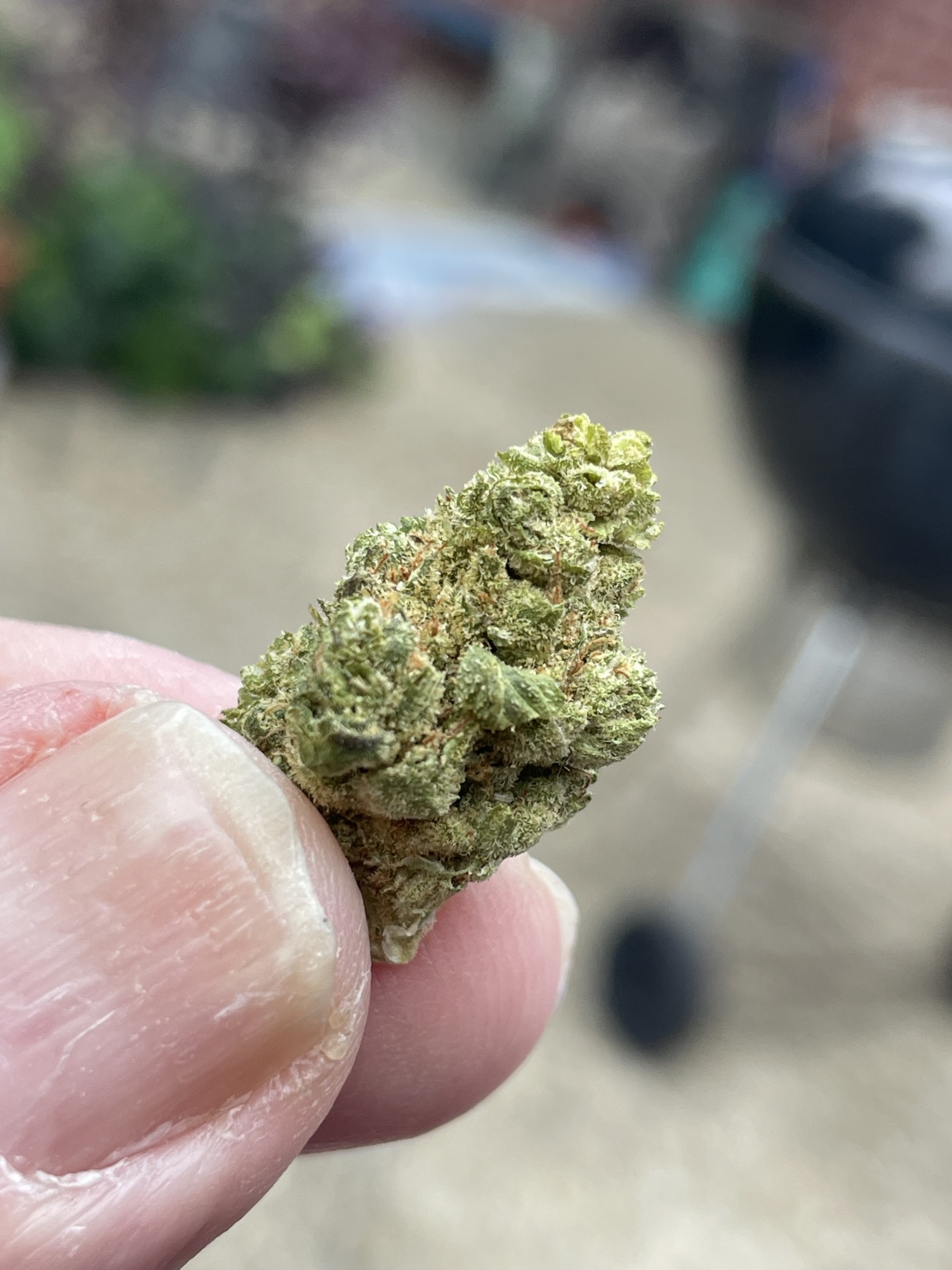
Cannabis on the MS Coast: Start Here
Coast Commons supports Mississippi’s medical cannabis program and the people it helps. This section has three parts, so you know what you’re reading:
THE GUIDE. Plain-language facts about how the program works, who qualifies, and where patients on the Gulf Coast can shop. We aim to keep it accurate and dated.
THE STORIES. Personal essays and photos from our own experience. These are opinion and memory, not medical advice.
THE KITCHEN. Home recipes, with dosing guidance. For registered patients only.
We are neighbors, not doctors or lawyers. Talk to your certifying practitioner about what’s right for you, and check with the Mississippi State Department of Health for current rules.
Last updated September 2026.
Medical Marijuana in Mississippi: How the Program Works and What’s Available on the Gulf Coast
Mississippi is one of the strictest medical cannabis states in the South, but it has a working program, and the Gulf Coast is one of its busiest regions. This guide covers how the program came about, how patients qualify, and where coastal patients shop.
How Mississippi Got Here
In November 2020, 69% of Mississippi voters cast their ballots in favor of enacting a medical cannabis program. That measure, Initiative 65, was later struck down by the state Supreme Court. Lawmakers then wrote their own program. Gov. Tate Reeves signed the Mississippi Medical Cannabis Act (SB 2095) on February 2, 2022, after it passed both chambers by wide margins. MPPMPP
The program took time to build out. The first legal sale of medical cannabis in the state didn’t happen until January 2023. Since then it has grown quickly. One industry guide puts it at roughly 68,000 active patients as of February 2026, around 175 active dispensaries, and about $139 million in 2025 retail sales. MississippistatecannabisCannabismississippi
Who Runs It
Oversight is split between two agencies, which is unusual. The Mississippi State Department of Health handles the patient and practitioner side and licenses the upstream supply chain, while the Department of Revenue licenses dispensaries and collects a 5% excise tax and a 7% sales tax. Patients deal mostly with the Health Department. Dispensary compliance falls to Revenue. Cannabismississippi
Becoming a Patient
The basic path has three steps:
- Get certified. A licensed Mississippi practitioner must certify that you have a qualifying condition on the state’s approved list.
- Register with the state. Patients need a registry ID card from the Department of Health. Adults 18 and older with a qualifying condition are generally eligible. Minors can enroll but must have a parent or legal guardian as their caregiver. Mississippistatecannabis
- Buy from a licensed dispensary using that card.
The rules are tight in several ways worth knowing:
- The condition list is fixed. Patients whose conditions aren’t on the list can’t enter the program regardless of severity, and doctors can’t override that. POT CULTURE MAGAZINE
- THC is capped. Flower is limited to 30% total THC, and tinctures, oils and concentrates to 60%. Cannabismississippi
- No home growing. Patients may not grow their own. All cultivation happens in licensed, secured indoor facilities. Cannabismississippi
- Employers keep their rights. The law doesn’t require employers to allow patient use or stop them from drug testing. A medical card is not a shield in the workplace. MPP
- It’s still federally illegal. Recreational use remains illegal in Mississippi, and cannabis remains illegal under federal law.
The 2026 Legislative Fight
Patients and industry members hoped 2026 would bring changes. Two bills passed the Legislature by veto-proof margins. HB 1152, the “Right to Try Medical Cannabis Act,” would have let a treating provider petition the Health Department to authorize cannabis for a patient whose condition isn’t on the approved list. HB 895 would have removed THC potency limits for certain products, extended caregiver registry cards to two years, and eliminated the automatic six-month follow-up visit requirement. WLOXWLOX
Reeves vetoed both on March 26. He argued that the existing law has been “largely successful” and that there was no reason to change it. Of HB 895, he wrote that it sought to erode three safeguards meant to limit diversion for recreational use. Supporters rallied at the Capitol, but lawmakers did not act to override the vetoes before the session ended. For now, the program’s rules are unchanged. Any effort to revive these ideas would have to wait for a future session. Gov. Reeves makes ample use of vetoes during 2026 session, with more expected +2
Dispensaries on the Gulf Coast
The coast has one of the densest concentrations of dispensaries in the state, spread from Bay St. Louis in the west to Ocean Springs in the east. One industry overview notes that dispensaries cluster around the Jackson metro, the Gulf Coast, Hattiesburg, the DeSoto County suburbs, Tupelo, and the Oxford–Starkville corridor. Cannabismississippi
Store names that appear in current directories include the following. Locations are noted only where the sources state them.
Coast Commons lists dispensaries as a public service. We have no financial relationship with any store listed.
Gulfport and Long Beach
- Dabbs Cannabis Dispensary. It has locations in Gulfport, Ocean Springs and Long Beach, and serves patients from across the coastal communities. Dabbsdispensary
- Lighthouse Cannabis Dispensary (Gulfport)
- 420 Holiday (Gulfport)
- Dixon Dispensary (Gulfport)
- Long Beach Dispensary
Biloxi and Ocean Springs
- Canna+U (Biloxi). It describes itself as serving patients across South Mississippi and the coast, from Pascagoula to Bay St. Louis. Canna+U
- Culture Biloxi Shop
- Rootdown (Ocean Springs)
- Coastal Capital Dispensary
- The Herbalist
- The Magnolia Healing
- The Islands Dispensary
Bay St. Louis, Waveland and Diamondhead
A 2023 list of licensed South Mississippi dispensaries included Coast Cannabis in Bay St. Louis, Diamondhead Root in Diamondhead, and several Bay St. Louis and Waveland shops along Highway 90. That list is several years old, so confirm any store is still open before you go. WXXV News 25
Dispensary businesses change hands, rebrand, and close, so treat these names as a starting point rather than a directory. Two habits help:
- Check the state’s licensing data or the store’s own site for current hours and status.
- Bring your registry card and a valid ID. Most stores also offer online ordering for in-store pickup.
Local Rules
Cities and counties have some say over where cannabis businesses can operate, and some jurisdictions in the state have opted out of allowing them. Rules on the coast can differ from one municipality to the next, so check with the city if you’re planning to open or locate a business.
Bottom Line
Mississippi’s medical cannabis program is small in scope but well established, and the Gulf Coast is one of its most accessible regions. Patients get a real network of licensed stores, but they also live with some of the nation’s tightest rules on potency, eligibility, and home cultivation. Expect the debate over loosening those rules to continue.
This article is for general information only and isn’t legal or medical advice. Program details, dispensary listings, and legislation change often, so verify current rules with the Mississippi State Department of Health’s Medical Cannabis Program before publishing or acting on anything here.
Mississippi’s medical cannabis program is working for thousands of our citizens. We are proponents of the healing and spiritual benefits of Marijuana.

Coast Commons serves our neighbors with useful information regarding medical marijuana in Mississippi.